
How to Calculate Body Fat Percentage at Home

Alisha Anjum
Introduction
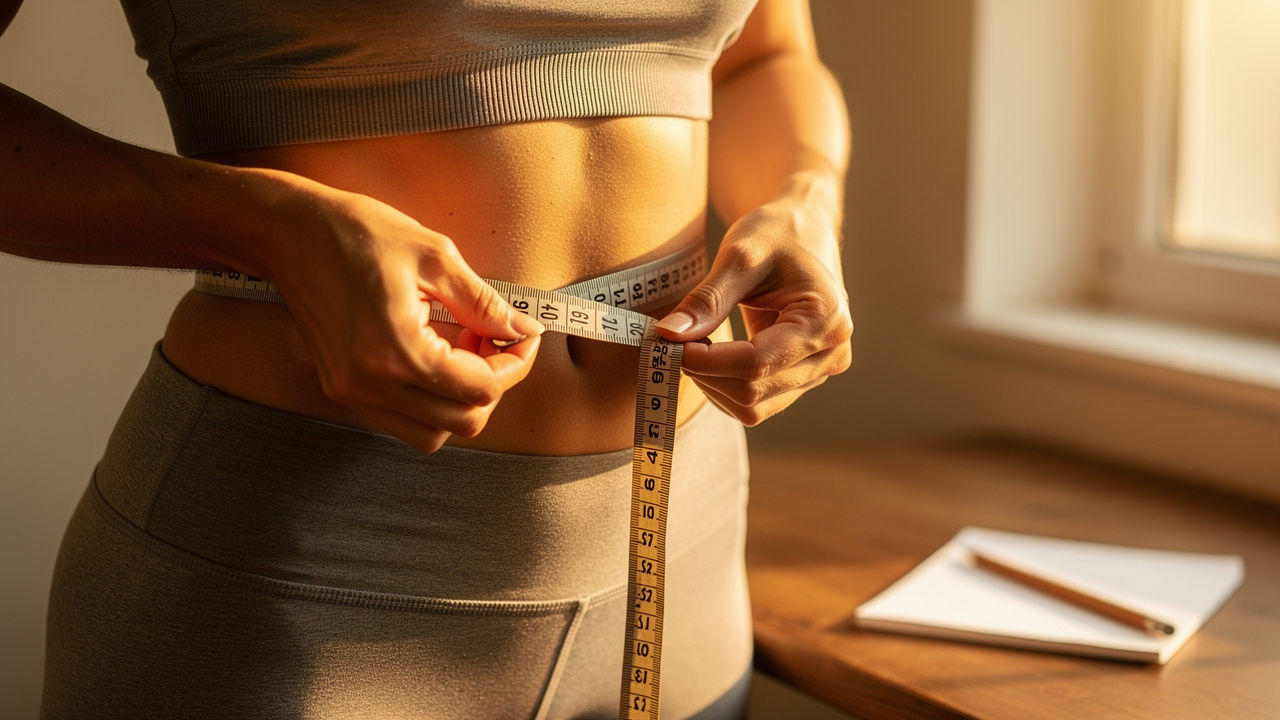
Scale weight alone can fool me, since it ignores how much of my body is fat versus muscle. Learning how to calculate body fat percentage gives a much sharper view of health, performance, and long‑term risk. In this guide I walk through simple math‑based methods and when it makes sense to look at clinical tests.
First I lay out what body fat percentage actually measures and how it compares to BMI. Then I show step‑by‑step tape‑measure math using the US Navy method, plus fast BMI‑based formulas when I only know height and weight. I also explain pro‑level tools like DEXA scans and smart scales.
By the end, I can read my own numbers with context and use Tools Repository to run the math in private, as often as I like.
Key Takeaways
Body fat percentage compares how much of my total weight is fat versus lean tissue, so it tells me more about health than the scale alone. Two people can weigh the same but have very different fat levels and risk patterns, which is why focusing only on pounds often hides real changes.
The US Navy tape method is the best at‑home way I can use with only a soft tape and a calculator. It uses neck, waist, and hips for women, and neck and waist for men, to estimate fat in a repeatable way. With careful measuring, it comes close to clinical tools.
BMI‑based body fat formulas are handy when I only know height, weight, age, and sex. They are quick to apply in code or a spreadsheet and match broad population patterns. They still struggle with athletes and older adults, so they work best as a backup.
Clinical methods such as DEXA, hydrostatic weighing, and the BOD POD measure body fat with higher accuracy. These options cost more money and time and are usually found in hospitals, research labs, or advanced sports centers. For most people they make sense only a few times, not every month.
Tools Repository gives me a free body fat percentage calculator that runs fully in the browser with no login. I can plug in tape and weight data and see instant numbers plus related metrics like BMI and ideal weight. My health data stays on my device instead of on someone else’s server.
What Is Body Fat Percentage and Why Does It Matter?
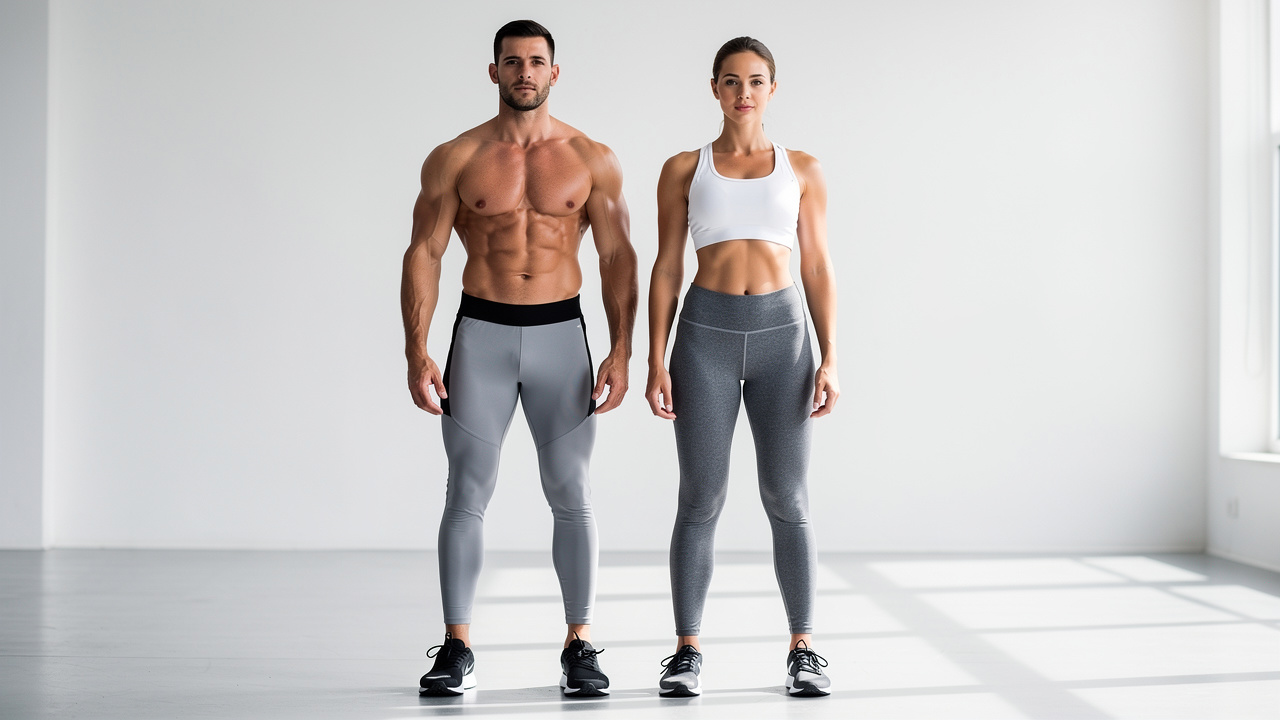
Body fat percentage tells me what share of my total body weight comes from adipose tissue instead of lean mass. Lean mass includes muscle, bone, organs, and water, so this single number captures the balance between stored energy and working tissue. Two people can both weigh 180 pounds, but if one carries 15 percent body fat and the other 30 percent, their health picture is very different.
According to the American Council on Exercise, body fat ranges fall into several broad groups:
Essential fat: about 2–5 percent for men and 10–13 percent for women. This is the bare minimum for hormone and organ function.
Athletes: roughly 6–13 percent for men and 14–20 percent for women.
Fitness and average: progressively higher ranges that still cover many healthy people.
Obese: above 25 percent for men and 32 percent for women on the ACE chart.
Age also changes the picture. Jackson and Pollock charts show that a healthy 20‑year‑old man might sit near 8.5 percent body fat, while a 55‑year‑old man with the same health status is closer to 20.9 percent. The same pattern holds for women, so I try to compare my number with people my age, not college athletes. Research reviewed in the New England Journal of Medicine and The Lancet links rising body fat, especially around the waist, with higher rates of early death across millions of adults.
In short, body fat percentage lets me go beyond a simple BMI label. I can see whether added weight comes mostly from muscle or from fat and how far I sit from ranges linked with better health. That context matters when I set training goals or talk with a doctor about risk.
How to Calculate Body Fat Percentage Using the US Navy Method
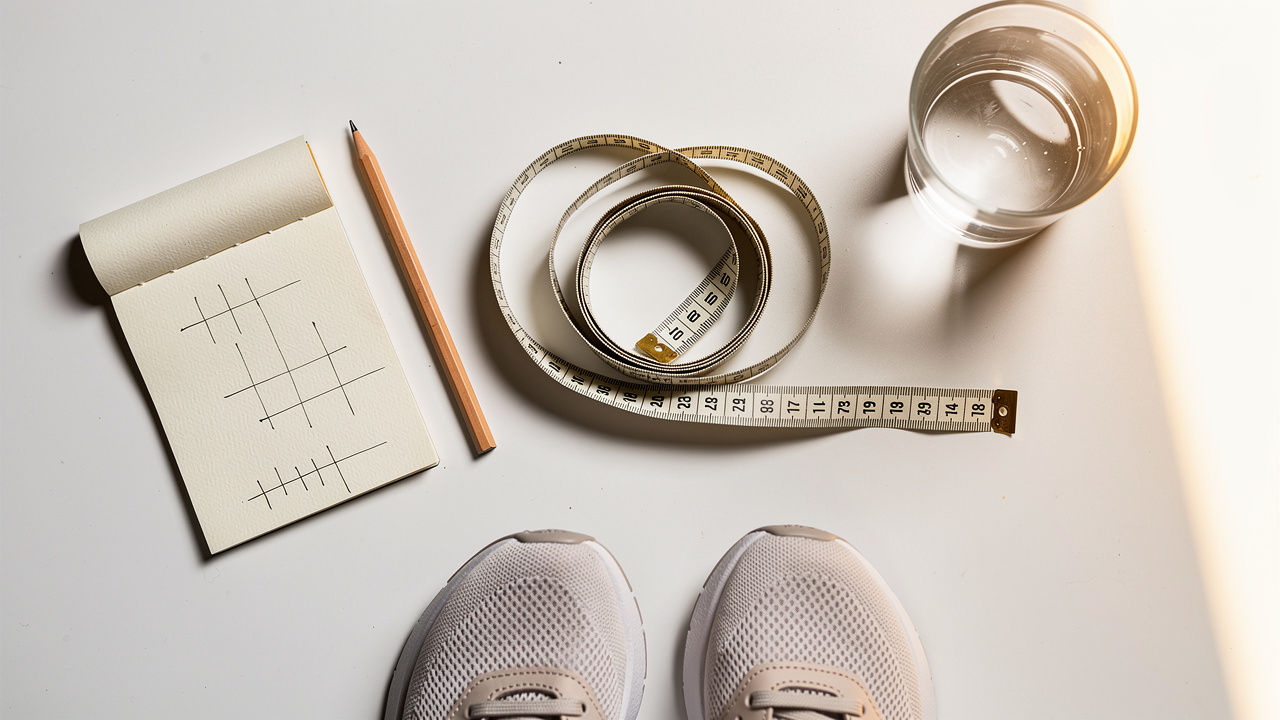
The US Navy method gives me a clear way to calculate body fat percentage at home using only a tape measure. It was developed at the Naval Health Research Center and is still used widely because it balances convenience and accuracy. The method estimates body fat from the relationship between height and a few body circumferences.
For measurements:
Men
Measure height while standing tall without shoes.
Wrap the tape around the neck just below the Adam’s apple, keeping the tape slightly slanted downward at the front.
Measure waist horizontally at the level of the navel while standing relaxed and breathing normally.
Women
Take the same height, neck, and waist measurements as men.
Add a hip measurement at the widest point across the buttocks.
According to research from the Naval Health Research Center, measurements should be taken to the nearest quarter inch or half centimeter for best accuracy.
Tip: Take at least two readings for each measurement and use the average. Measuring at the same time of day, before a meal, helps keep results more consistent.
Here is the basic idea of the math without drowning in symbols. The formulas for both sexes use base‑10 logarithms of these measurements to model how body volume and shape relate to fat. After I plug in my numbers, I get a body fat percentage that is often within a few points of lab methods. For example, a man who is 70 inches tall with a 16‑inch neck and 34‑inch waist will usually calculate around the mid‑teens.
Once I know my percentage, I can find fat mass and lean mass:
Fat mass = (body fat percentage ÷ 100) × total body weight
Lean mass = total body weight − fat mass
That split helps me track whether changes on the scale come more from fat loss or muscle change instead of guessing.
Simplify The Calculation With Tools Repository’s Body Fat Percentage Calculator

Instead of writing formulas by hand, I can let Tools Repository handle the math for me. The Body Fat Percentage Calculator on Tools Repository uses the same US Navy method I just walked through, with a clear form for height, neck, waist, and hips where needed. I type in my numbers and see my estimated body fat in less than a second.
All of these calculations run in my browser, so my measurements never leave my device. According to Tools Repository’s own docs, there is no tracking code, no cookies for profiling, and no account system at all. The calculator also works smoothly on phones, tablets, and desktops and sits next to other helpful tools like the BMI Calculator, Ideal Weight Calculator, Macros Calculator, BSA Calculator, and Weight Converter. That makes it easy for me to compare several health metrics side by side without juggling apps or sign‑ups.
Can You Estimate Body Fat Using BMI? The Formula Based Approach
I can also learn how to calculate body fat percentage from BMI when I only know height, weight, age, and sex. BMI itself is just a height‑ and weight‑based index:
Metric: BMI = weight (kg) ÷ [height (m)]²
Imperial: BMI = weight (lb) × 703 ÷ [height (in)]²
On its own, BMI can mislabel muscular people as overweight, but it works well in large studies.
Researchers then created formulas that turn BMI into an estimated body fat percentage by adding age and sex. For adults, a common set of equations is:
Men: body fat (%) = 1.20 × BMI + 0.23 × age − 16.2
Women: body fat (%) = 1.20 × BMI + 0.23 × age − 5.4
Versions for boys and girls under 18 use different constants so they match childhood growth patterns better, as described in work cited by the World Health Organization.
These formulas are handy for quick checks or large databases, and they are easy for me to code into a web app. Yet they still share BMI’s weak spots. They cannot see whether extra weight is dense muscle or stored fat, and they do not know where fat sits on the body. Studies reviewed by the Centers for Disease Control and Prevention show that people of Asian, Black, or Middle Eastern background often reach higher health risk at different BMI levels than white peers.
Tip: If I lift heavy weights or have lost a lot of muscle with age, I treat BMI‑based body fat results as a rough screening tool, not a final answer.
So when I care about my own body rather than a population chart, I rely more on tape‑based or clinical methods. BMI‑based body fat estimates make sense when I am building quick tools, screening many people at once, or filling gaps when I do not have a tape handy. I just remember to treat the results as rough, not as precise numbers.
What Are the Most Accurate Clinical Methods for Measuring Body Fat?
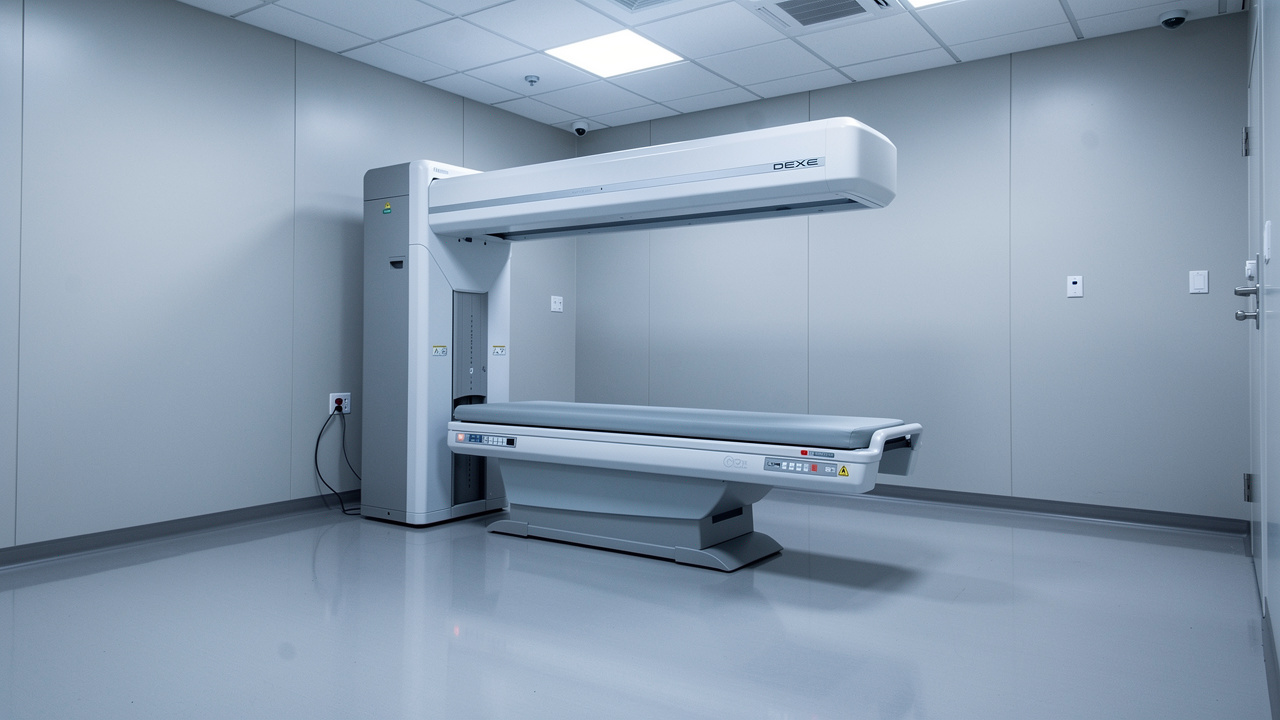
Clinical methods to calculate body fat percentage give me the tightest error bars but also cost more money and time. They use physics or imaging instead of tape and home math. Picking the right one depends on whether I just want a snapshot or need detailed data for medical or sports reasons.
Common clinical options include:
Skinfold calipers
A trained professional pinches fat folds at several spots, such as the triceps, abdomen, and thigh, and reads the thickness in millimeters. Those numbers go into standard tables or software that estimate body fat. Accuracy can be good when the tester has strong experience, but it drops a lot for very lean athletes or people with severe obesity.Bioelectrical impedance analysis (BIA)
This method powers most smart scales and handheld devices. It sends a tiny electrical current through the body and measures how much it slows down. Because muscle holds more water than fat, the device can infer relative amounts of each. According to the National Institutes of Health, readings can swing widely with changes in hydration, illness, or heavy exercise, so it helps to test under the same conditions each time. These devices also are not suitable for people with pacemakers.DEXA scans
Among imaging tools, DEXA stands out for its balance of detail and access. A short, low‑dose X‑ray scan splits the body into bone, lean tissue, and fat, often broken down by arms, legs, and torso. Private clinics in the United States often charge around 100 to 200 dollars per scan, as reported by the American Journal of Roentgenology.Hydrostatic weighing and BOD POD
These methods focus on body density, using water or air displacement. They show very high accuracy in lab settings but require special equipment that most people never see outside research or elite sports facilities.
Tip: If I book a DEXA, hydrostatic, or BOD POD test, I keep copies of the full report. Comparing a new scan against the same method years later shows long‑term changes very clearly.
For nearly everyone, these methods are interesting reference points rather than regular tracking tools. Tape measures and calculators are usually enough for month‑to‑month progress.
Making the Most of Your Body Fat Percentage Results
Using these methods to calculate body fat percentage is only helpful if I know what to do afterward. I start by comparing my number with ACE categories and age‑adjusted Jackson and Pollock targets instead of fixating on a single ideal. That way I see a band of values that fit my age, sex, and activity level.
Next, I look at trends more than single readings. A two‑point shift over a few months means more than one reading that seems a bit off. Here is the key part: if my number sits far into the obese range or drops below essential fat, I treat that as a prompt to speak with a doctor or registered dietitian, not as a reason for panic.
From there, I can:
Adjust calorie intake and macronutrients so they line up with my goals.
Review my training plan to include both resistance work and cardio.
Set a realistic time frame for change instead of chasing overnight results.
Reminder: Body fat percentage is information, not a verdict. I use it to guide better choices, not to judge myself.
Conclusion
Body fat percentage gives me a clearer health signal than the scale because it separates fat from everything else that makes up my weight. I can use the US Navy tape method, BMI‑based formulas, smart scales, or clinical scans depending on my needs and budget. Tape methods and the Body Fat Percentage Calculator from Tools Repository are usually plenty for regular tracking and quiet goal setting at home.
Since Tools Repository runs fully in the browser and keeps measurements off remote servers, it fits well with a privacy‑first approach to health data. I can also jump between its BMI, ideal weight, and macros tools when I want extra context for training or nutrition plans. Whatever numbers I see, I remember that they are information, not judgment, and I pair them with professional advice when I plan big changes.
Frequently Asked Questions
What Measurements Do I Need To Calculate Body Fat Percentage at Home?
To calculate body fat percentage at home with the US Navy method, men need neck, waist, and height measurements. Women need neck, waist, hip, and height measurements. All values should come from a soft tape held level around the body while standing relaxed. I write them down to the nearest quarter inch or half centimeter. Tools Repository’s calculator accepts these measurements directly and performs the full Navy math instantly in my browser.
How Accurate Is the US Navy Method Compared To a DEXA Scan?
The US Navy method is reasonably accurate for most people, often landing within about three to four percentage points of lab methods. It works best when I measure carefully and use the same tape spots each time. A DEXA scan from a medical imaging center gives a more precise split of bone, lean tissue, and fat, often used in research or clinical care. For everyday tracking and fitness goals, the Navy method and Tools Repository’s calculator are usually more than enough.
Is It Safe To Have Very Low Body Fat Percentage?
Very low body fat can be unsafe once it dips below essential levels needed for normal function. ACE lists essential fat at about 2–5 percent for men and 10–13 percent for women, which supports hormones, nerves, and organs. The athlete range sits just above that and is safer for most active people. Going lower can harm heart health, mood, fertility, and bone density, so I only aim that low with close medical supervision.
Does Body Fat Percentage Change With Age?
Yes, body fat percentage almost always rises with age, even if weight stays similar. Metabolism slows and hormones shift, which makes it easier to gain fat and harder to keep muscle. Jackson and Pollock charts show that a healthy 20‑year‑old man averages around 8.5 percent body fat, while a healthy 55‑year‑old man averages near 20.9 percent. Using these age‑adjusted targets helps me set realistic, sustainable goals instead of chasing college numbers forever.
Why Is My Smart Scale Body Fat Reading Different Every Day?
Smart scale body fat readings jump around because bioelectrical impedance depends heavily on water in the body. Dehydration, a salty meal, hard training, or menstrual cycle changes all affect conductivity and skew readings. To get steadier trends, I test under the same conditions, such as first thing in the morning after using the restroom. I then compare that trend with tape‑based results or the Tools Repository calculator for a calmer picture of progress.
Tip: I focus on weekly or monthly averages from my smart scale instead of reacting to a single surprising number.