
Mass Converter: Convert Units Fast & Free Online

Alisha Anjum

Converting 500 grams to ounces for a recipe, or figuring out how many pounds sit inside a metric ton, shouldn’t require a calculator and a formula sheet. Yet manual mass conversion trips up plenty of students, writers, and small business owners, especially when two unit systems don’t line up cleanly. A mass converter solves this by instantly translating any mass or weight value into dozens of other units, from kilograms and pounds to carats, troy ounces, and even historical measurements like shekels.
This article walks through what a mass converter actually does, the range of units it typically supports, and which conversions people search for most often. You’ll also see how to use a free, browser-based mass converter from Tools Repository that skips logins and keeps your data private. By the end, picking the right units and trusting your results should feel far less confusing. Let’s start with what a mass converter really is and why mass and weight aren’t technically the same thing.
Key takeaways
- A mass converter instantly swaps a value between mass and weight units, saving you from manual math.
- Converters typically cover metric, imperial, scientific, and historical units within one tool.
- Kilograms to pounds, grams to ounces, and kilograms to stone rank among the most searched conversions.
- Tools Repository offers a free, no-login mass converter that runs entirely in your browser.
- Matching precision and unit variants, like troy ounce versus standard ounce, keeps your results accurate.
Table of Contents
- What is a mass converter?
- What units can you convert with a mass converter?
- Which mass conversions do people search for most?
- How do you use a free online mass converter?
- The takeaway
- Frequently asked questions
What is a mass converter?
A mass converter is a digital tool that instantly translates a numeric value from one mass or weight unit into another, replacing manual formulas and long division. Instead of memorizing that a kilogram equals roughly 2.2 pounds, you type in a number, pick your starting unit and target unit, and the result appears right away. This speed matters whether you’re adjusting a recipe, checking a shipping weight, or verifying a lab measurement for a report.
Technically, mass measures the actual matter in an object and never changes, while weight is the force gravity applies to that mass and shifts with location. A person weighs slightly less on the Moon despite having the same mass. In everyday use, though, these terms blend together, and most mass converters treat kilograms, pounds, and similar units as weight equivalents without drawing a hard line.
What units can you convert with a mass converter?
A mass converter typically groups its units by system, which makes it easier to find exactly what you need without scrolling through an impossibly long list. Everyday categories include the metric and imperial systems that most people encounter in cooking, shipping, and fitness, while more advanced categories serve scientists, jewelers, historians, and astronomers who need far more specialized measurements. Rather than forcing you to hunt down separate reference charts, a well-built converter keeps every one of these systems in a single dropdown or search box. Below is a quick tour of the main categories you’ll find in most full-featured mass converters, from units you use weekly to ones reserved for research and historical study.
Metric units

The metric system serves as the global standard for mass conversion, built around the kilogram as its base unit. Grams handle smaller everyday measurements, milligrams and micrograms serve pharmaceutical and laboratory work, and metric tons cover large industrial quantities. Because everything scales by factors of ten, converting between these units mostly comes down to shifting a decimal point.
Imperial and US customary units
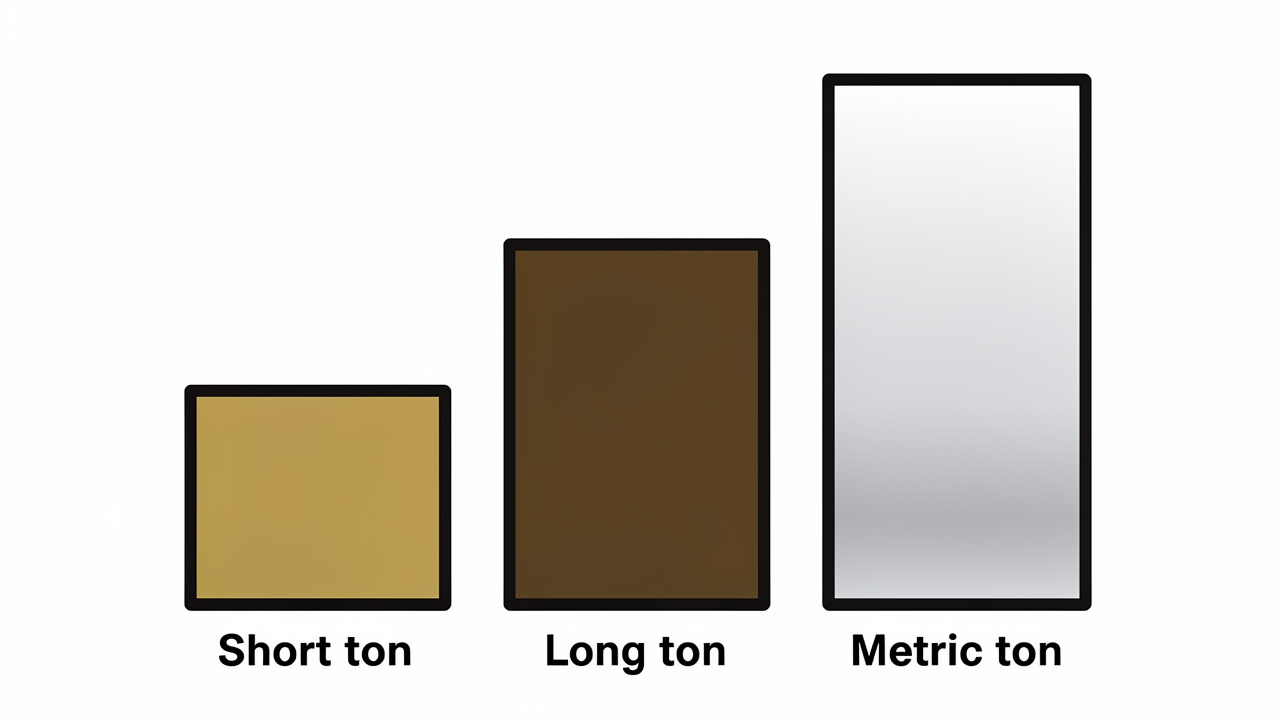
Pounds and ounces dominate everyday weight measurements across the United States, while stones remain the standard for body weight in the United Kingdom and Ireland. Ton measurements vary more than people expect, and mixing them up causes real problems in shipping paperwork.
| Ton type | Equivalent weight |
|---|---|
| Short ton (US) | 2,000 lb |
| Long ton (UK) | 2,240 lb |
| Metric ton | 1,000 kg |
Scientific and specialty units
Researchers and jewelers rely on units that rarely appear in daily life. Atomic mass units and Daltons measure molecules and subatomic particles, while carats, at 200 milligrams each, and troy ounces handle gemstones and precious metals. Pennyweights serve the jewelry trade specifically. For advanced physics work, converters often include electron mass, proton mass, and neutron mass, letting researchers move between particle-scale and lab-scale figures instantly.
Historical and astronomical units
Academic and archaeological research calls for measurement systems that predate the metric era. Biblical and ancient units like the shekel, talent, mina, and Greek drachma help scholars interpret historical trade records and religious texts accurately. On the opposite end of the scale, astronomical conversions let researchers express Earth’s mass or the Sun’s mass in more familiar terms, supporting astrophysics coursework and space science projects.
Which mass conversions do people search for most?
Some mass conversions come up far more often than others, simply because they match common daily tasks like travel, cooking, and shipping. Recognizing these patterns helps explain why mass converters remain genuinely useful tools rather than niche calculators used only in labs.
- Kilograms to pounds for international travel, fitness tracking, and cross-border commerce.
- Grams to ounces for cooking, baking, and precise pharmacy measurements.
- Kilograms to stone for everyday body weight talk in the UK and Ireland.
- Metric tons to pounds for shipping quotes and international logistics.
- Milligrams to grams for medication dosing and nutrition label accuracy.
How do you use a free online mass converter?
Using a mass converter takes three simple steps, enter your value, choose a source unit and a target unit, then read the instant result. Tools Repository’s mass converter follows this exact pattern, running entirely in your browser with no login required.
Why choose a browser-based converter
A browser-based mass converter processes every calculation directly on your device, which means no value you type ever travels to an outside server. This matters for freelancers handling client pricing data or students working with assignment figures they’d rather keep private. There’s nothing to download and nothing to install before you can start converting.
The platform keeps its version free with no sign-up, no hidden “pro” tier, and no subscription waiting behind a paywall. Because it runs in any modern browser, it works the same on a desktop, tablet, or phone, so switching devices mid-task causes no disruption. That consistency makes it a practical pick for students, freelancers, and small teams who want accurate conversions without adding another monthly expense.
Tips for accurate results
Accuracy starts with picking the correct unit variant, since similarly named units can mean different things. A troy ounce, about 31.1 grams, differs from a standard ounce, about 28.35 grams, and a short ton isn’t the same as a metric ton. Double-checking which variant applies to your field, whether that’s jewelry, shipping, or cooking, prevents small mistakes from turning into bigger ones.
Tip: When precision really counts, match your decimal places to the task. Scientific work often calls for several decimal places, while a recipe or fitness log rarely needs more than one.
When you’re converting a long list of values, look for a tool that handles bulk conversion so you’re not repeating the same steps dozens of times. Keeping a simple record of your source figures and results also helps when double-checking academic or professional work later.
The takeaway
Mass converters remove the guesswork from switching between metric, imperial, and specialty units, whether you’re adjusting a recipe, prepping a shipment, or checking a lab figure. They cut down on manual math errors and save time that adds up quickly when conversions happen daily. Understanding the main unit categories, from everyday kilograms and pounds to niche troy ounces and historical shekels, helps you pick the right tool for each task.
If you convert mass values regularly, bookmarking a free, privacy-first option is worth the minute it takes. Tools Repository’s mass converter asks for no account, stores nothing, and works the same across devices, making it a dependable addition to your everyday toolkit alongside its other browser-based utilities.
Frequently asked questions
Mass conversion raises a handful of recurring questions, especially around unit variants and data privacy. The answers below cover the distinctions people search for most, from the exact gram-to-pound figure to how ton types differ internationally. Use this section as a quick reference whenever a new mass conversion question comes up during work or study.
Is mass the same as weight in a converter?
Technically, no. Mass measures matter and stays constant everywhere, while weight is the gravitational force on that mass. In practice, mass converters ignore this difference and treat kilograms and pounds as everyday weight equivalents, since gravity rarely changes outside physics or space contexts.
How many grams are in a pound?
One pound equals exactly 453.592 grams, a figure that’s one of the most looked-up mass conversions online. This number comes from the internationally agreed definition linking the pound to the kilogram, so it never changes regardless of which converter or reference table you use.
What is the difference between a short ton, long ton, and metric ton?
A short ton, used in the US, equals 2,000 pounds, a long ton, historically used in the UK, equals 2,240 pounds, and a metric ton equals 1,000 kilograms, or about 2,204.6 pounds. Mixing these up in shipping or trade documents can lead to costly miscalculations.
Can I convert multiple mass values at once?
Yes, many mass converters include a bulk or batch feature for exactly this purpose. You paste a list of values, pick your source and target units once, and the tool converts every line at the same time. This saves real time for students processing assignment data or professionals managing large inventory lists.
Do online mass converters store my data?
Privacy-focused tools, including the Tools Repository mass converter, process every calculation directly in your browser and never store or transmit your input values. Nothing you type gets uploaded to a server or logged for later access, which matters when you’re working with sensitive business or academic figures.
Why do troy ounces differ from regular ounces?
A troy ounce, about 31.1 grams, is reserved for precious metals like gold and silver, while a standard avoirdupois ounce, about 28.35 grams, covers everyday goods like food and shipping weights. Mixing them up when pricing gold or silver produces a noticeably wrong figure.